About Our Founder
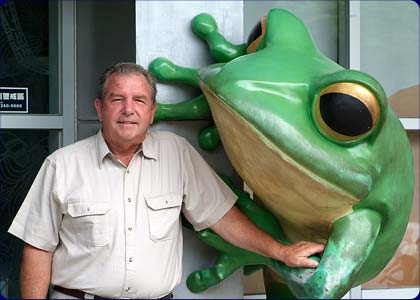
Robert T. Zappalorti
Over the past 50 years, Herpetological Associates has been able to meet the needs of a rapidly changing world while ensuring the protection of threatened and endangered (T&E) species.
Founded by Robert T. Zappalorti in 1977, HA specializes in writing habitat management, conservation, and mitigation plans for the protection of reptiles, amphibians, birds, and rare plants.
Bob Zappalorti started his professional career at the Staten Island Zoo in 1963, working under the renowned herpetologist Carl Kauffeld.
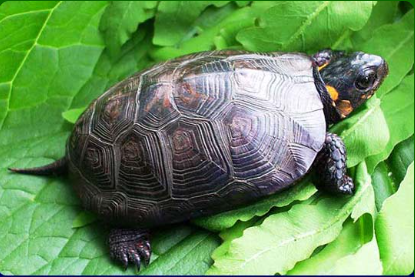
Under Kauffeld’s guidance and mentorship, Bob began studying the rapidly declining Bog Turtle (Glyptemys muhlenbergii) throughout New Jersey, Pennsylvania, and North Carolina.
In 1977, Bob founded Herpetological Associates to assist clients in complying with the Endangered Species Act of 1973 and the formation of the New Jersey Endangered and Nongame Species Program (NJDEP).
HA was awarded a research grant from the New Jersey Endangered and Nongame Species Program to conduct Bog Turtle, Northern Pine Snake, Red Corn Snake, and Timber Rattlesnake studies.
In 1992, HA was awarded a research contract with the Pennsylvania Chapter of The Nature Conservancy to conduct an intensive Bog Turtle survey throughout eastern and central Pennsylvania, which included nesting ecology, egg predator studies, and searches for new populations.
Until recently, herpetology has been a neglected area of science. There is now a great demand for knowledge about the needs of reptiles and amphibians and other wildlife.
HA is dedicated to the conservation and long-term survival of the interesting organisms we study. We strive to create a balance between economic progress and smart conservation.
We are one of the few consulting companies to publish books and peer-reviewed scientific papers.
Our services have expanded to include a variety of T&E species, including amphibian, reptile, rare plant, and bird species.
State and federal agencies, non-profit groups, engineering firms, developers, and private citizens have come to rely on HA as a dependable source for all their environmental consulting needs.
Our Commitment
At Herpetological Associates, our commitment is to deliver high-quality ecological and environmental consulting services that are both scientifically rigorous and cost-effective.
Serving the Mid-Atlantic region—including all of New Jersey, New York, Connecticut, Delaware, Maryland, and eastern and central Pennsylvania.
We assist clients in evaluating project sites and producing accurate, defensible data through surveys, field investigations, and environmental monitoring that satisfy local, state, and federal permitting requirements and support informed decision-making and long-term environmental stewardship.
We recognize that no two projects are identical. For that reason, we tailor our work to meet the specific goals, constraints, and regulatory requirements of each client.
Every survey, assessment, and planning effort is conducted with careful attention to scope, precision, and practical application, ensuring that the work is not only technically sound, but also relevant to the real-world needs of development, conservation, and compliance.
With a team of experienced environmental scientists and herpetologists, we offer a multidisciplinary approach to complex environmental challenges. Our expertise spans threatened and endangered (T&E) species surveys, ecological land-use planning, and mitigation strategies.
By integrating field-based knowledge with strong technical reporting and planning insight, we help clients navigate environmental concerns efficiently while maintaining respect for the ecosystems and rare species that may be impacted by land-use decisions.
Ultimately, our commitment is not simply to complete projects to the satisfaction of our clients, but to provide reliable guidance, professional integrity, and environmental solutions that stand up to both regulatory review and scientific standards.
Robert T. Zappalorti Sr.
CEO & Founder
About Herpetological Associates, Inc.
Herpetological Associates, Inc. specializes in surveys for threatened and endangered (T&E) species, their ecology, and conservation. We offer a full range of ecological and environmental consulting and planning services throughout New Jersey, New York, Connecticut, Delaware, Maryland, and Pennsylvania.
With more than 49 years of experience, our firm has conducted over 1,400 threatened and endangered species studies involving a wide range of rare and protected plant and animal species.
Founded by Robert T. Zappalorti in the spring of 1977, Herpetological Associates, Inc. (HA) specializes in the conservation and ecology of threatened and endangered amphibians and reptiles.
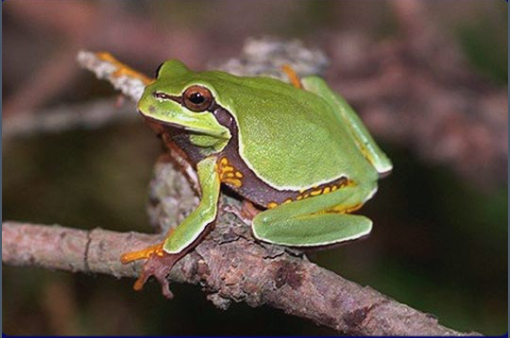
Robert has conducted extensive scientific research on the bog turtle, wood turtle, red-belly turtle, timber rattlesnake, corn snake, pine snake, blue-spotted salamander, tiger salamander, southern gray treefrog, Pine Barrens treefrog, and many other species.
He specializes in conservation and mitigation plans and was the first herpetologist to build artificial hibernacula for snakes and other wildlife in natural habitat areas.
Robert has also conducted wildlife inventories, intensive herpetological studies, and presence or absence surveys for a variety of clients.
He has served as an expert witness and provided testimony in State and County Courthouses and before numerous Township Planning Boards. Robert is a published author of many books, scientific papers, and articles on herpetology.
He is also an accomplished wildlife photographer, with photo credits in numerous books and magazines, including National Geographic Magazine. He has served as the official herpetological consultant to the Endangered and Nongame Species Program, Division of Fish and Wildlife, New Jersey Department of Environmental Protection, the Division of Coastal Resources (CAFRA), the New Jersey Pinelands Commission,
The Trust for Public Land, and The Nature Conservancy. Prior to starting HA, he was Associate Curator of Herpetology and Education at the Staten Island Zoological Society in New York between 1974 and 1977. Robert also was a Reptile Keeper at the Staten Island Zoological Society between 1963 and 1974 and worked under the late Carl F. Kauffeld.
At Herpetological Associates, our commitment is to deliver high-quality ecological and environmental consulting services that are both scientifically rigorous and cost-effective.
Serving the Mid-Atlantic region—including all of New Jersey, New York, Connecticut, Delaware, Maryland, and eastern and central Pennsylvania—we assist clients in evaluating project sites and producing accurate, defensible data through surveys, field investigations, and environmental monitoring that satisfy local, state, and federal permitting requirements and support informed decision-making and long-term environmental stewardship.
We recognize that no two projects are identical. For that reason, we tailor our work to meet the specific goals, constraints, and regulatory requirements of each client.
Every survey, assessment, and planning effort is conducted with careful attention to scope, precision, and practical application, ensuring that the work is not only technically sound, but also relevant to the real-world needs of development, conservation, and compliance.
With a team of experienced environmental scientists and herpetologists, we offer a multidisciplinary approach to complex environmental challenges.
Our expertise spans threatened and endangered (T&E) species surveys, ecological land-use planning, habitat evaluations, mitigation strategies, biological monitoring, and environmental compliance services.
By integrating field-based knowledge with strong technical reporting and planning insight, we help clients navigate environmental concerns efficiently while maintaining respect for the ecosystems and rare species that may be impacted by land-use decisions.
Herpetological Associates is qualified to conduct all phases of T&E species investigations, including Phase I habitat evaluations, Phase II presence-or-absence surveys, and Phase III intensive trapping studies, in accordance with state and federal regulatory requirements.
Our staff is experienced in surveying, trapping, and studying both state- and federally listed species, including the federally listed bog turtle. T&E species surveys are conducted in areas regulated by the New Jersey Department of Environmental Protection, the New Jersey Pinelands Commission, and other regulatory agencies throughout the region.
Our ecological services include habitat evaluations and presence/absence surveys for state- and federally listed threatened and endangered species throughout the Mid-Atlantic region.
Over the past 49 years, HA has completed more than 1,400 T&E species studies involving a broad spectrum of rare and protected plant and animal species.
When T&E plant or wildlife species are identified, we work closely with project teams and regulatory agencies to develop mitigation and conservation plans, when required, to offset potential environmental impacts.
These plans are designed to minimize habitat disturbance, protect sensitive ecological resources, and ensure full compliance with environmental permits and approval conditions.
Herpetological Associates also provides biological monitoring services to protect sensitive plant and animal species during land-disturbance activities.
Qualified biologists are present on-site to identify, document, and protect threatened and endangered species in accordance with permit requirements.
Construction and biological compliance monitoring is often required during land-disturbance and infrastructure projects such as pipelines, utility corridors, fiber-optic installations, access roads, and residential or commercial developments.
Monitoring is conducted to observe, document, and limit impacts to plant and animal species while ensuring compliance with environmental permit conditions.
During active construction, monitors conduct pre-activity inspections and observe clearing, excavation, trenching, and other ground-disturbing operations within approved work areas.
Monitors identify wildlife activity, suitable habitat, or species presence and coordinate protective measures when necessary.
If protected species are encountered, monitors may recommend modifications and ensure that approved avoidance and mitigation measures are implemented. All monitoring activities are carefully documented to demonstrate full compliance with permit requirements.
Through ongoing field coordination with contractors and regulatory agencies, monitoring services help reduce regulatory risk, prevent project delays, and ensure construction activities proceed responsibly while protecting natural resources.
In addition to reptile and amphibian expertise, Herpetological Associates is proficient in avian (bird) surveys, ecology, and conservation.
We provide comprehensive presence/absence surveys, nest surveys, habitat assessments, and environmental consulting services to support land development, conservation planning, and to determine whether target species are present on the project site.
Our ornithological services include breeding bird surveys, migratory bird monitoring, raptor surveys, winter bird inventories, stopover habitat assessments, and long-term avian monitoring programs designed to evaluate habitat suitability, identify ecological constraints, and inform responsible land-use decisions.
HA also conducts biological inventories on public and private lands, focusing on developing reptile, amphibian, and bird species catalogs. These projects often result in mapping habitats, documenting key habitat features, and identifying biodiversity hotspots.
Our inventories establish a reliable ecological baseline that helps clients understand site conditions, evaluate conservation value, and make informed decisions about land stewardship, development, restoration, and public education.
We combine traditional field biology with modern mapping, GIS analysis, and documentation techniques to develop detailed, site-specific species catalogs and wildlife habitat assessments.
Surveys are carefully structured around habitat type, seasonal timing, weather conditions, and detection probability using proven field methods such as visual encounter surveys, coverboard monitoring, call playback surveys, drift fence and funnel trapping systems, and habitat evaluations.
This integrated, multi-species approach provides a complete understanding of site biodiversity and supports effective natural resource management.
Our services also include advanced GIS-based habitat mapping and species distribution analysis to document key landscape features and wildlife patterns across a property.
Mapping may delineate wetlands, forest edges and interior habitat, upland refugia and overwintering areas, riparian corridors, floodplain systems, vernal pools, habitat connectivity, and other critical ecological resources.
Spatial analysis helps clients understand where species occur, how habitats function together, and where conservation priorities should be directed.
As part of this process, we identify biodiversity hotspots—areas of high species richness or ecological significance that are important for restoration, compliance, and long-term stewardship.
Each project provides data to support long-term monitoring, environmental management, and adaptive decision-making, allowing clients to track ecological change, evaluate management effectiveness, and measure conservation outcomes over time.
This information is valuable for park and preserve management, open space planning, environmental impact evaluation, and long-term conservation planning.
Inventories and ecological assessments also include practical, science-based management recommendations tailored to each site, such as habitat protection priorities, restoration opportunities, invasive species considerations, seasonal activity guidance, and monitoring strategies.
These recommendations help balance environmental stewardship with land-use objectives.
Findings can also be adapted to support public outreach and environmental education through interpretive signage, educational materials, park-based learning initiatives, and community engagement programs that help organizations communicate the ecological value of protected lands.
Ultimately, our commitment is not simply to complete projects to the satisfaction of our clients, but to provide reliable guidance, professional integrity, and environmental solutions that stand up to both regulatory review and scientific standards.
Contact Herpetological Associates, Inc.
Herpetological Associates, Inc.
405 Magnolia Road
Pemberton, New Jersey 08068
Contact Us: (732) 833-8600